
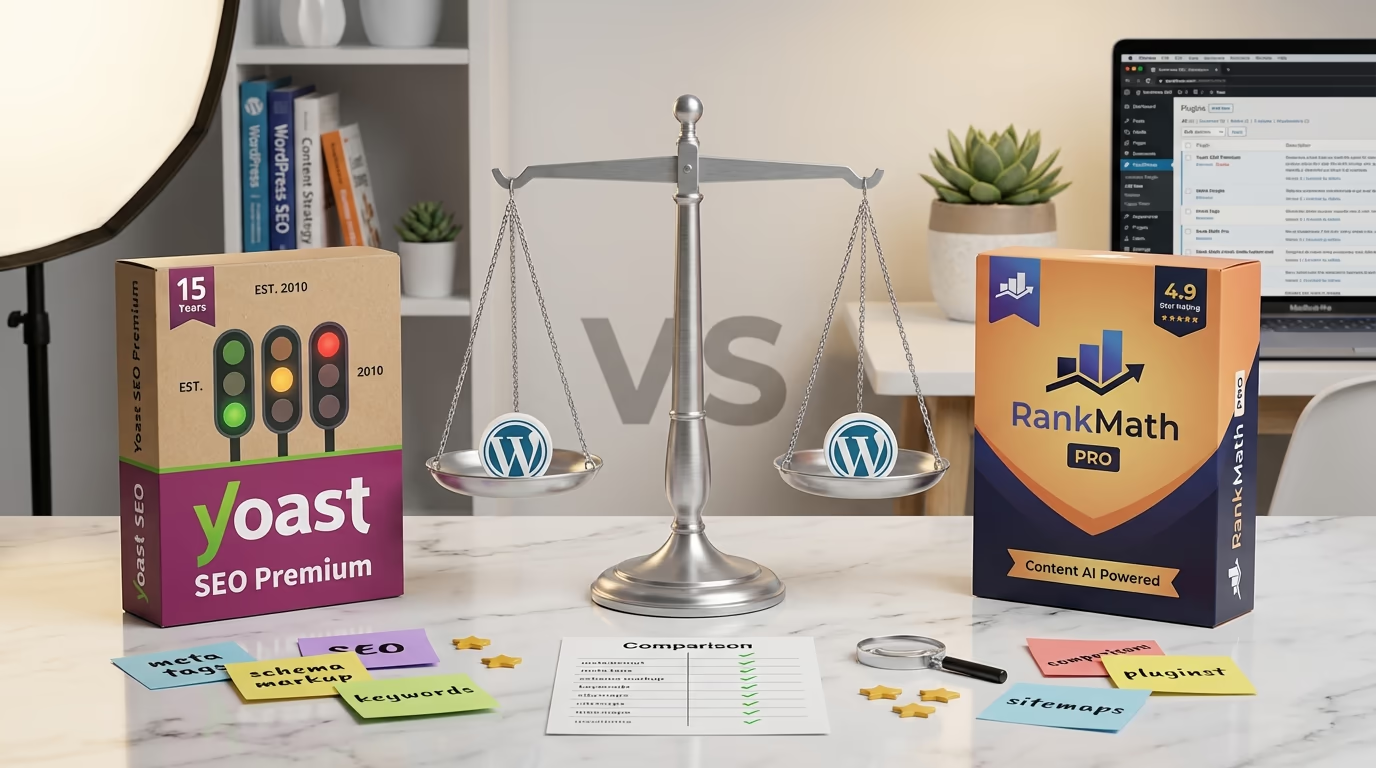
Rank Math is the better choice for most WordPress site owners in 2026, especially if you manage more than one site or want premium-level features without paying. Yoast still wins on readability analysis and long-term stability, but Rank Math’s free tier includes tools that Yoast locks behind its $118.80/year premium subscription. Both plugins handle the SEO fundamentals well, so the real question comes down to your budget, how many sites you run, and which workflow you prefer.
Yoast SEO has over 10 million active installations and a 4.8-star rating on WordPress.org, making it the most established option by a wide margin. Rank Math launched in 2018 and has already passed 3 million installations with a slightly higher 4.9-star rating. That growth rate reflects a real shift in what WordPress users expect from an SEO plugin.
We’ve tested both plugins across blogs, WooCommerce stores, portfolio sites, and membership platforms, so the comparison below reflects hands-on use rather than spec sheets.
Here is how Rank Math and Yoast SEO stack up at a glance, with the full breakdown in the sections that follow.
| Feature | Rank Math | Yoast SEO |
|---|---|---|
| Focus keywords, free tier | Up to 5 per post | 1 per post |
| Redirect manager | Free | Premium only |
| 404 monitor | Free | Not included |
| Schema types | 20+ free, 840+ in Pro | Core set, automatic |
| Built-in rank tracking | Yes, in Pro | No |
| Readability analysis | Yes | Yes, more detailed |
| AI features | Content AI | AI Generate, Optimize, Summarize |
| Single-site price | Free or $95.88/yr Pro | Free or $118.80/yr Premium |
| Multi-site licensing | Unlimited personal sites in Pro | Charged per domain |
| Migrate from the other | One-click Yoast import | No import tool |
| Active installs | 3 million plus | 10 million plus |
What Makes Rank Math and Yoast SEO Different?

Yoast SEO has been around since 2010, making it the longest-running WordPress SEO plugin by a wide margin. Founded by Joost de Valk and acquired by Newfold Digital in 2021, it benefits from corporate backing that means regular updates, a large support team, and serious development resources. Its green, orange, and red traffic lights have become synonymous with WordPress SEO for millions of users worldwide.
Rank Math arrived in 2018, developed by MyThemeShop with a deliberately disruptive strategy. They positioned themselves as the feature-rich alternative by offering capabilities that Yoast kept locked behind paywalls, and it worked. Within five years, they’d captured significant market share and built a reputation for free-tier generosity that Yoast couldn’t match.
Both plugins handle the fundamentals of WordPress SEO effectively. They generate XML sitemaps automatically, help you craft meta titles and descriptions, add schema markup to your content, and provide real-time content analysis as you write. The differences emerge in how they implement these features and what they include at each pricing tier.
Yoast follows a traditional freemium model, while Rank Math disrupted that approach by offering many premium-equivalent features for free. Recent updates show them converging in some areas, with Yoast expanding its free tier to include Local SEO, Video SEO, and News SEO features that previously required separate paid add-ons.
Which Free Version Gives You More Features?

The free version comparison is where Rank Math pulls ahead significantly. It’s not even close for users who want maximum functionality without spending money.
Rank Math Free includes optimization for up to five focus keywords per post. You can target multiple search terms with a single piece of content and get real-time feedback on how well you’re optimizing for each one. The plugin also includes a built-in redirect manager, 404 error monitoring, Google Search Console integration, and support for over 20 schema types including FAQ, HowTo, and Product schemas.
The free tier provides automated image SEO that adds alt text, titles, and descriptions to images missing those attributes. Bulk editing capabilities let you update meta titles and descriptions across hundreds of posts simultaneously. Local SEO features help businesses optimize for geographic searches. These are professional-grade tools available at no cost.
Yoast SEO Free takes a more conservative approach. You get one focus keyword per post in the free version, no redirect manager, no 404 monitoring, no Google Search Console integration within the plugin. The schema markup options are more limited, and you won’t find local SEO features without upgrading.
What Yoast free does well is the basics. The traffic light system provides clear, actionable feedback, the readability analysis is arguably more helpful than Rank Math’s equivalent, giving specific suggestions about sentence length, paragraph structure, transition words, and passive voice usage. For content creators focused primarily on writing quality, this matters.
For bloggers and small site owners on tight budgets, Rank Math’s free version delivers significantly more value. You’re getting features that would cost over $100 annually with Yoast. The gap narrows when comparing paid tiers, but the free comparison heavily favors Rank Math.
How Do Their Premium and AI Features Compare?

Both plugins added AI-powered features throughout 2025 and into 2026, and these additions represent the biggest functional evolution in WordPress SEO plugins in years. If you’re interested in broader AI applications for WordPress, our guide on using AI for WordPress content creation covers additional tools worth exploring.
Yoast SEO Premium now includes three AI-powered tools. Yoast AI Generate creates five SEO-optimized title and meta description options with a single click. You can regenerate for more options until you find something that works. Yoast AI Optimize analyzes your content and automatically improves keyphrase placement in introductions, throughout the body, and optimizes keyword density. The newest addition, Yoast AI Summarize (released September 2025), generates concise content summaries useful for social sharing or content briefs.
Premium users also get internal linking suggestions, the redirect manager, word forms recognition (so “decorating” matches “decoration”), social media previews for Facebook and X, and 24/7 support access. The Bot Blocker feature helps manage AI crawlers like GPTBot and Google-Extended. IndexNow integration speeds up content indexing after publishing.
Rank Math Pro takes AI in a different direction with Content AI. This feature analyzes top-ranking pages for your target keyword and provides specific recommendations: suggested word count, optimal heading structure, related keywords to include, and content gap analysis. It’s more strategic than Yoast’s generative approach.
Content AI includes over 40 AI tools for generating blog posts, emails, marketing copy, and social media content. Pro subscribers receive 5,000 AI credits (trial), with Business and Agency plans getting 12,000 and 30,000 respectively. The advanced schema generator supports 840+ schema types, far exceeding Yoast’s offerings.
Rank Math Pro adds keyword rank tracking directly within WordPress. You can monitor 500 keywords in the Pro plan, scaling up to 50,000 in the Agency plan. The analytics integration pulls data from Google Search Console and Google Analytics into your dashboard without leaving WordPress. SEO performance reports help identify opportunities and track progress over time.
Both premium versions genuinely expand your toolkit, and the split is easy to reason about. Yoast leans toward content creation and optimization, while Rank Math leans toward analytics, tracking, and competitive research.
How Much Do Rank Math and Yoast Cost in 2026?

Pricing is the biggest practical difference between these plugins, especially if you’re managing multiple websites.
Yoast SEO Premium costs $118.80 per year for a single website. That price now includes Local SEO, Video SEO, and News SEO features that previously required separate purchases. One subscription covers one domain only. Need five sites? You’re looking at $594 annually. Ten sites pushes you to $1,188 per year. Agencies managing dozens of client sites face substantial costs.
Rank Math pricing works on a tiered model based on site count rather than per-site licensing:
- Pro Plan: $7.99/month billed annually ($95.88/year) for unlimited personal websites. Renewal increases to $8.99/month.
- Business Plan: $24.99/month billed annually ($299.88/year) for up to 100 client websites. Includes priority support and 10,000 keyword tracking.
- Agency Plan: $54.99/month billed annually ($659.88/year) for up to 500 client websites. Includes 50,000 keyword tracking and maximum AI credits.
The math becomes clear quickly, a single site owner pays roughly the same for either plugin annually. But someone managing ten personal sites would pay $1,188 with Yoast versus $95.88 with Rank Math Pro. That’s over $1,000 in annual savings.
Agencies and freelancers benefit most from Rank Math’s model, the Business plan at $299.88/year covers 100 client sites, achieving similar coverage with Yoast would cost nearly $12,000 annually. Even accounting for bulk discounts Yoast offers, the price difference remains substantial.
Which Plugin Is Easier to Set Up and Use?

Rank Math’s setup wizard guides you through configuration in about five minutes. It analyzes your site, recommends optimal settings, and configures SEO fundamentals automatically. You’ll connect your Google accounts, set default schema types, configure sitemap settings, and establish social media profiles. The wizard works well for beginners while offering advanced mode for experienced users who want granular control.
Yoast’s configuration wizard takes longer, walking through 12 steps that can feel excessive for experienced users. The questions are straightforward but numerous. Some users appreciate the thoroughness while others find it tedious. The end result configures similar settings to Rank Math’s faster process.
Migration between plugins deserves mention here. Rank Math includes a one-click migration tool that imports settings, meta titles, descriptions, and other SEO data from Yoast (and several other plugins) without losing existing optimization work. Yoast doesn’t offer equivalent import functionality, making switches in that direction more labor-intensive.
The daily editing experience differs in important ways. Yoast displays its SEO analysis in a sidebar panel within the block editor, with a meta box option below the content for classic editor users. The interface is clean and familiar to anyone who’s used WordPress for years. The traffic light system makes feedback immediately understandable.
Rank Math integrates more deeply into the block editor with a floating SEO score indicator. The metabox feels more feature-dense, which can appear overwhelming initially but provides more information at a glance once you’re familiar with the layout. The modular system lets you disable features you don’t use, cleaning up the interface.
Both plugins work with Full Site Editing themes. If you’re using a modern block theme like those covered in our best WordPress block themes guide, either plugin integrates smoothly with the site editor workflow.
Which Handles Schema and Technical SEO Better?

Schema markup has become increasingly important as Google relies more on structured data for rich snippets and AI-generated search features. If you’re new to the topic, our guide to WordPress schema markup covers the fundamentals. Both plugins handle schema, but their approaches and capabilities differ significantly.
Yoast SEO adds structured data automatically using smart defaults. Article schema gets applied to blog posts, Product schema to WooCommerce products, Organization schema to your homepage. The automatic approach works well for most sites without requiring manual configuration. Yoast’s structured data content blocks integrate directly into the block editor for FAQ and HowTo schema.
Rank Math provides more extensive schema options, especially in paid versions. The free tier supports over 20 schema types, pro versions open up 840+ schema types through the advanced schema generator. You can create custom schema templates, import schema from other websites, and apply different schema types to specific post categories automatically.
For WooCommerce stores, Rank Math adds Product Carousel schema to shop and archive pages automatically. This can improve how your products appear in Google Shopping results and product carousels. The detail level exceeds what Yoast offers for ecommerce implementations.
Technical SEO beyond schema shows similar patterns. Both plugins generate XML sitemaps automatically, manage robots.txt files, and handle canonical URLs. Rank Math includes the 404 monitor and redirect manager in its free version, Yoast requires premium for redirect functionality.
How Do They Affect Your WordPress Site Speed?
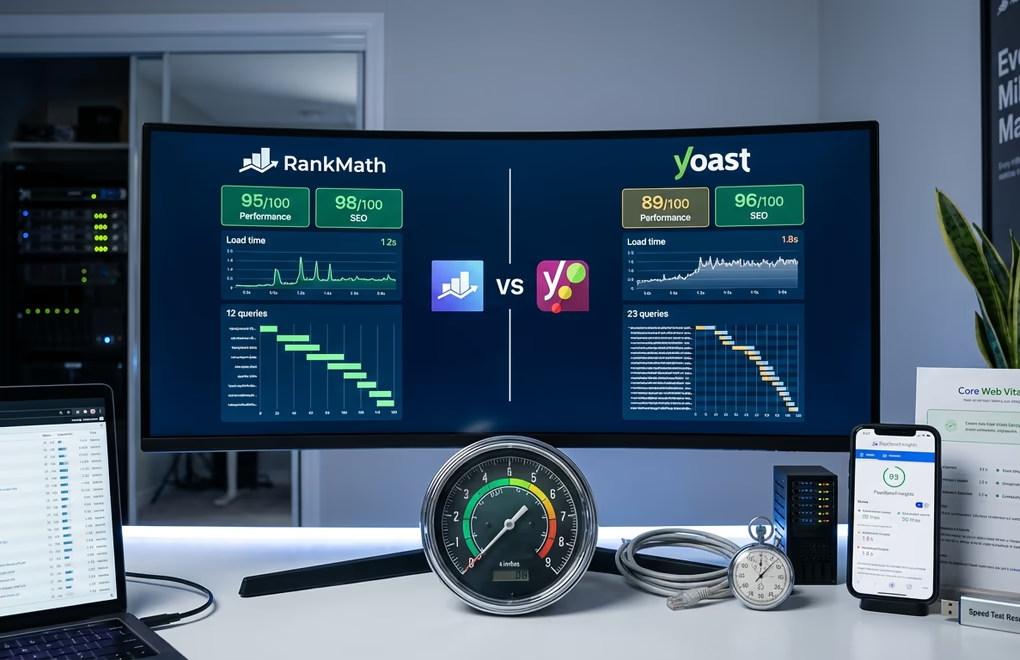
SEO plugins need to modify page output, add scripts, and run database queries. This overhead affects site performance, and with Core Web Vitals serving as ranking factors, plugin efficiency matters. For practical speed optimization strategies, check our guide on simple ways to optimize your WordPress site speed.
Independent testing has shown mixed results over the years, with performance varying based on which features are enabled. The consensus from Query Monitor testing and New Relic analysis suggests Yoast historically added more database queries and slightly longer load times compared to Rank Math’s leaner codebase.
Rank Math’s modular architecture allows disabling unused features, reducing overhead. If you don’t need the 404 monitor or redirect manager, turn them off. The plugin loads only the components you’ve enabled. This approach means a carefully configured Rank Math installation can be quite lightweight.
Yoast has improved performance significantly in recent versions. The 2025 updates reduced database queries and optimized JavaScript delivery. The gap between plugins has narrowed, though Rank Math still edges ahead in most benchmarks when comparing default configurations.
Your theme and hosting affect performance more than your SEO plugin does. A bloated theme with heavy JavaScript will hurt Core Web Vitals no matter which plugin you run, and budget shared hosting struggles with either plugin’s database queries. A performance-optimized block theme like DigiFlash, built for Full Site Editing with minimal CSS and no JavaScript, paired with modern PHP 8.2 or newer and object caching, makes SEO plugin overhead negligible.
Which Is Better for WooCommerce and Ecommerce SEO?

Online stores have specific SEO requirements that general-purpose plugins handle differently. Product schema, category optimization, and duplicate content management all require attention for ecommerce success.
Rank Math includes WooCommerce SEO support in its free version. Product schema markup gets added automatically, including price, availability, reviews, and ratings. The plugin handles duplicate content issues that arise from product variations and filtered views. Bulk editing lets you update product meta titles and descriptions efficiently across large catalogs.
The Pro version adds Product Carousel schema for shop pages and global identifier fields (GTIN, MPN, ISBN) for enhanced product markup. These details help products appear in Google Shopping results and product knowledge panels.
Yoast WooCommerce SEO is now bundled with Yoast Premium rather than sold separately. The integration adds product schema automatically, optimizes category and tag pages, and provides content analysis tailored to product descriptions. Social media previews show how products will appear when shared on Facebook and Pinterest.
For stores selling digital products specifically, lightweight alternatives like DigiCommerce offer built-in SEO optimization designed specifically for digital goods. The specialized approach can outperform general ecommerce plugins for download-based businesses.
How Does Their Support and Documentation Compare?

Yoast maintains detailed documentation covering every feature, common issues, and best practices. The SEO blog publishes regular educational content about search optimization beyond just plugin usage. Free users access support through WordPress.org forums where response times vary. Premium subscribers get 24/7 access to Yoast’s support team with faster response guarantees.
Rank Math provides detailed documentation with step-by-step guides for every feature. The knowledge base includes troubleshooting articles, developer documentation for extending the plugin, and video tutorials. Free users can ask questions in the WordPress.org support forum or the dedicated Facebook community group.
Both plugins have strong security track records, with regular updates that patch vulnerabilities quickly. Keep your SEO plugin current alongside your WordPress security best practices for full protection.
Which SEO Plugin Actually Fits Your WordPress Site?
After examining every meaningful difference, the choice becomes clearer based on your specific situation.
Choose Rank Math if you want maximum features without paying, manage multiple websites, need detailed analytics within WordPress, or prefer competitive pricing for premium features. The free version delivers exceptional value, and the paid tiers cost dramatically less than Yoast for multi-site users.
Choose Yoast SEO if you value the familiar traffic light interface, want superior readability analysis, prefer established stability from a fifteen-year track record, or need the educational resources Yoast Academy provides. Single-site owners find comparable value between plugins at the premium level.
Both plugins handle the technical fundamentals correctly. The differences lie in pricing models, feature accessibility at free tiers, and AI implementation. You can build a successful WordPress site with either choice.
Frequently Asked Questions
Is Rank Math really free, or do you need the paid version?
Rank Math’s free version is genuinely usable for most WordPress sites. It includes up to five focus keywords per post, a redirect manager, 404 monitoring, Google Search Console integration, and over 20 schema types. The paid Pro plan ($7.99/month billed annually) adds keyword rank tracking, Content AI, and 840+ schema types, but plenty of site owners run entirely on the free tier without feeling limited.
Can I switch from Yoast to Rank Math without losing my SEO data?
Yes. Rank Math includes a one-click migration tool that imports your meta titles, descriptions, focus keywords, redirects, and other SEO settings directly from Yoast. The process takes a few minutes on most sites, and your existing search rankings aren’t affected because the underlying page content and URLs stay the same. Yoast doesn’t offer an equivalent import tool for switching in the other direction.
Does Rank Math or Yoast slow down WordPress?
Both plugins add some overhead, but the impact is small on properly hosted sites. Rank Math’s modular architecture lets you disable features you don’t use, which reduces its footprint. Yoast historically added more database queries, though its 2025 performance updates narrowed the gap. Your theme and hosting choice affect site speed far more than either SEO plugin.
Which SEO plugin is better for WooCommerce stores?
Rank Math includes WooCommerce SEO support for free, while Yoast bundles it only with Premium ($118.80/year). Both add product schema automatically and handle duplicate content issues from product variations. For stores selling digital products rather than physical goods, a specialized plugin like DigiCommerce can be a lighter and more focused alternative to WooCommerce entirely.
Is Yoast SEO worth paying $118.80 per year for?
For a single-site owner who values the traffic light system, superior readability analysis, and Yoast Academy’s educational content, Premium can be worth it. But the calculus changes fast when you manage multiple sites, since Yoast charges per domain while Rank Math Pro covers unlimited personal sites for $95.88/year. If budget efficiency matters to you, Rank Math’s pricing model offers substantially more value at scale.



0 Comments on "Rank Math vs Yoast SEO: Which WordPress Plugin Should You Choose in 2026?"