
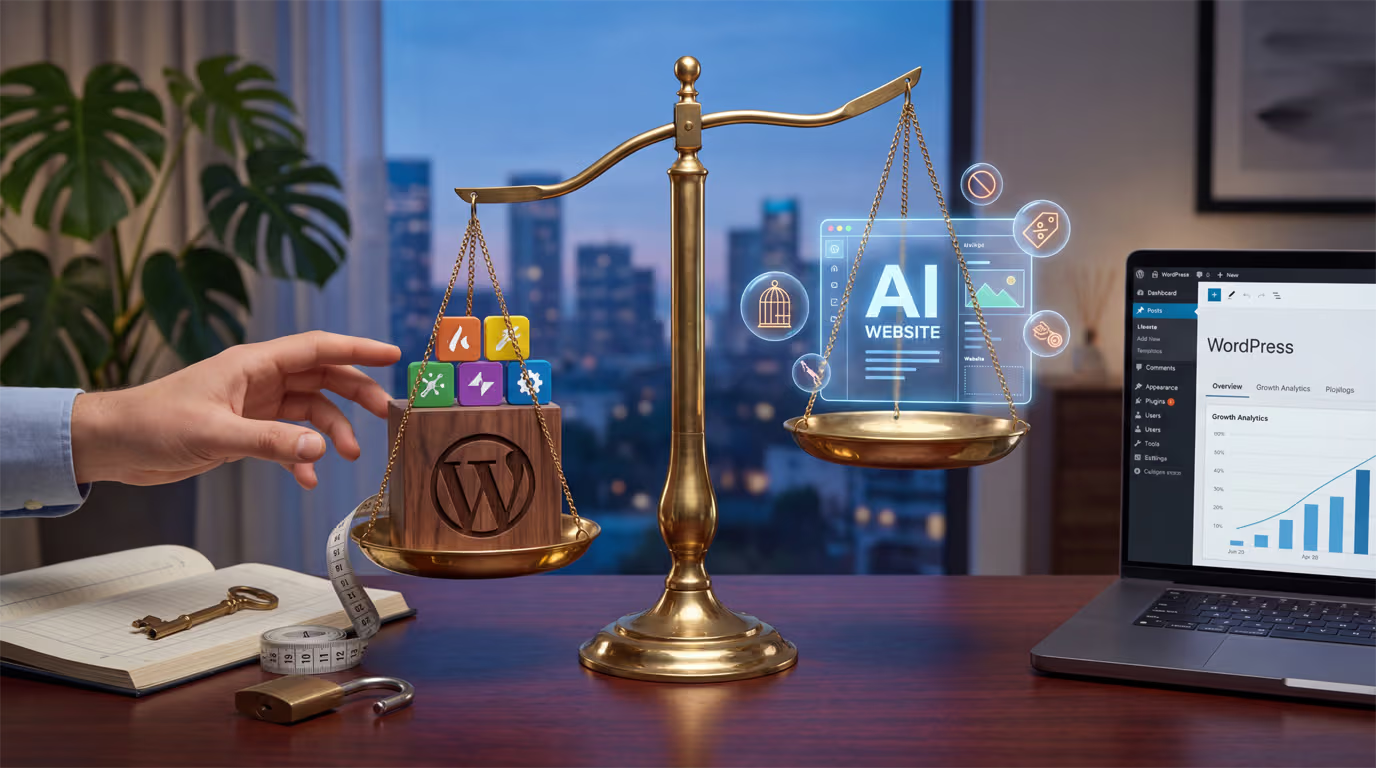
The promise sounds incredible. Type a few sentences about your business, click a button, and watch an AI website builder create your entire site in under sixty seconds. Wix does it, Hostinger’s builder does it, Squarespace, Framer, and a dozen other platforms have all jumped on the bandwagon. Marketing pages everywhere show smiling business owners who apparently built professional websites during their lunch break.
But here’s what those marketing pages won’t tell you: the real problems start six months later. Your business grows, you need features the AI builder doesn’t support, you want to switch platforms but discover your content is trapped, the monthly costs keep climbing as you add features that should have been basic from the start.
I’ve watched this pattern repeat dozens of times. Someone launches with an AI website builder because it seemed faster and easier. Few months later, they’re either stuck paying premium prices for basic functionality or facing the painful prospect of rebuilding everything from scratch on WordPress. The initial time savings evaporated long ago.
This guide breaks down the real differences between AI website builders and WordPress in 2026. We’ll cover what AI builders actually do well, where they fall apart, and how to make the right choice based on your actual long-term needs rather than short-term convenience.
What AI Website Builders Actually Deliver in 2026
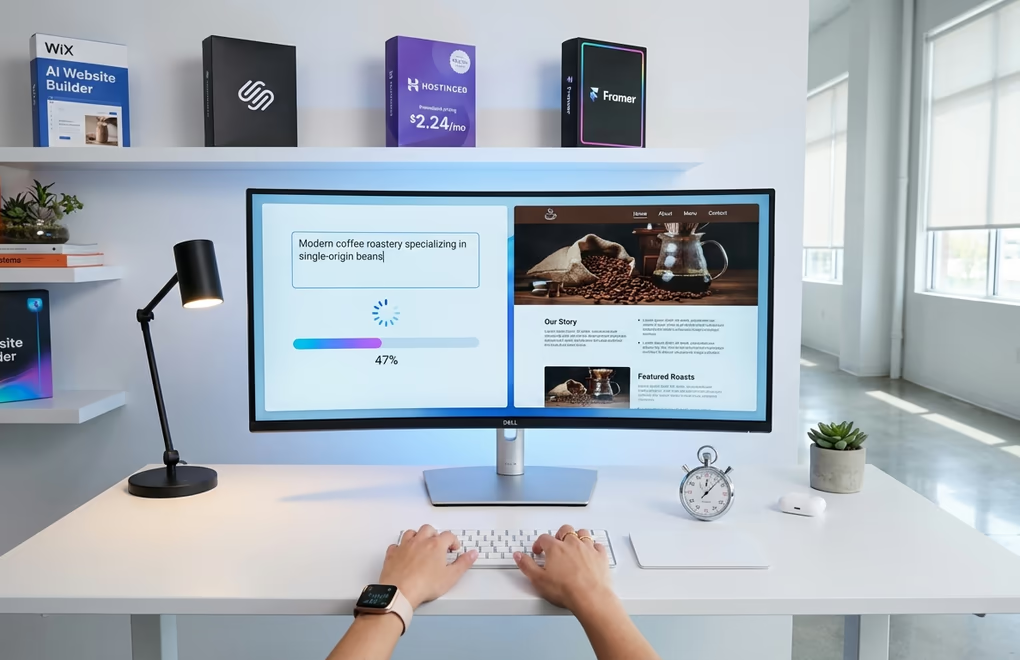
Let’s be fair to AI builders first, because they do solve real problems for specific use cases. The technology has genuinely improved since Wix launched ADI back in 2016. Modern AI website builders can analyze your business description, pull relevant imagery, structure content logically, and generate a functional website in minutes rather than days.
Wix remains the market leader with the most comprehensive AI feature set. Their builder handles site generation, content writing, image creation, and even tone-of-voice adjustments. Hostinger offers aggressive pricing starting around $2.24 per month, making it attractive for budget-conscious users who prioritize cost over flexibility. Squarespace targets established businesses wanting professional templates with minimal design decisions.
For simple landing pages, portfolio sites, or minimum viable products where you’re testing an idea, these tools work reasonably well. A freelance photographer who needs a basic gallery site, a local restaurant that just needs a menu and contact info, or an entrepreneur validating a business concept before investing heavily in web development can all benefit from the speed of AI generation.
The platforms also handle maintenance automatically. Security patches, software updates, and server infrastructure remain invisible to users. You don’t manage servers, worry about compatibility issues between plugins, or troubleshoot PHP errors at 2 AM. For non-technical users who want to avoid anything that looks like backend management, this simplicity has genuine value.
Where does this leave you? With a website that looks professional on day one but may become a serious liability within a year. The problems aren’t immediately visible, which makes them particularly dangerous for business owners planning for growth.
The Vendor Lock-In Trap That Catches Everyone
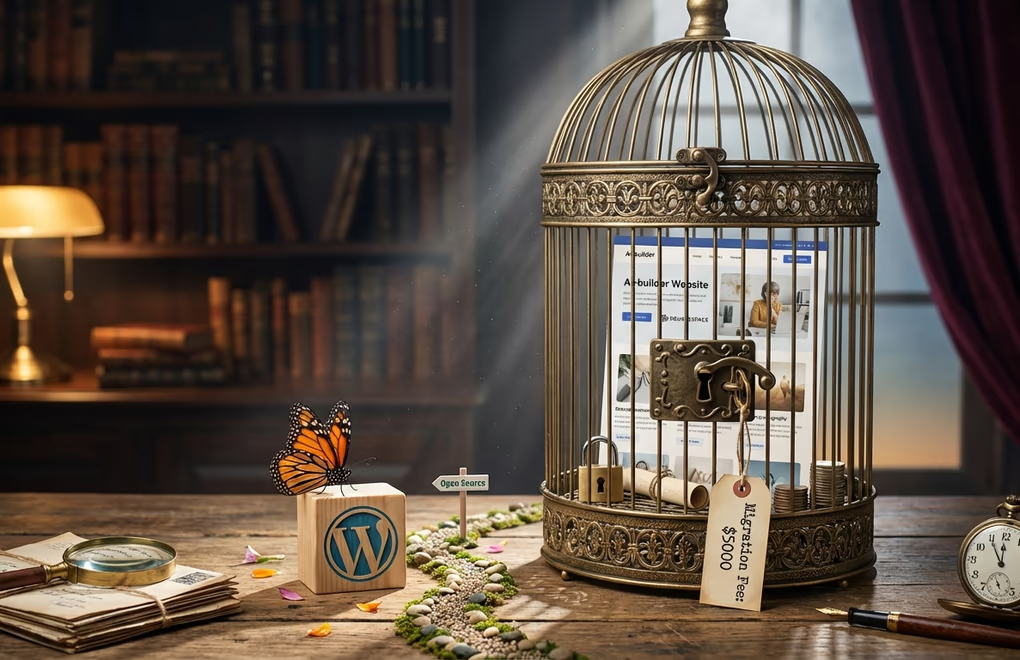
Using an AI website builder means your entire online presence lives on someone else’s proprietary platform. This creates a dependency that becomes increasingly expensive to escape over time. The problem isn’t theoretical; it’s the single biggest complaint from users who’ve been on these platforms for more than a year.
When you build on Wix, Squarespace, or similar platforms, your content exists in their format. There’s no standard export that transfers cleanly to another system. Moving to WordPress or any competitor means essentially rebuilding from zero, re-uploading every image, recreating every page, and manually reformatting all your content. The more content you create, the more painful migration becomes.
WordPress operates fundamentally differently. You own your database, your files, and your content. Hosting providers compete for your business because switching costs remain low. Don’t like your current host? Export your site and move to a competitor in an afternoon. The platform itself is open-source, meaning no single company controls your website’s future. Over 43% of all websites run on WordPress precisely because this independence matters.
The financial implications compound over time. AI builders typically increase prices as they add features you’ve come to depend on. You can’t easily negotiate because your switching costs are enormous. WordPress users, by contrast, have thousands of hosting options at various price points. Competition keeps costs down and service quality up.
Consider what happens if your AI builder company gets acquired, changes direction, or goes bankrupt. Your website could become collateral damage in someone else’s business decision. With WordPress, the platform survives regardless of any individual company’s fate because it’s maintained by a global community rather than a single corporation.
The Traffic Ceiling That Crashes Growing Businesses

This is where AI website builders truly fall apart, and it’s the problem nobody talks about until it’s too late. Your marketing campaign goes viral, a major publication links to your site, holiday traffic spikes beyond normal levels, and your AI-built website crashes, losing sales and damaging your reputation at the worst possible moment.
AI builders strain under high-concurrency scenarios. They can’t handle multi-step checkout funnels during peak traffic, role-based access systems with many simultaneous users, or the database queries that complex e-commerce requires. Studies show that a 1-second delay in page load time results in a 7% reduction in conversions. When your AI-built site slows down under load, you’re literally watching money disappear.
The technical reality is brutal. As volume grows, production websites need horizontal scaling, tuned caching layers, CDN optimization, and multi-region setups. AI builders don’t expose these controls. You’re stuck with whatever infrastructure they provide, and that infrastructure wasn’t built for businesses that actually succeed and grow.
WordPress sites scale because you control the entire stack. Choose a hosting provider with auto-scaling. Implement object caching with Redis. Use a CDN like Cloudflare to serve assets globally. Optimize database queries when they become bottlenecks. These aren’t exotic enterprise features anymore, they’re standard tools that any growing WordPress site can implement, and they’re completely unavailable on proprietary AI platforms.
The gap between prototype and production is where AI builders consistently fail. That impressive demo site that loaded instantly during your trial? It was running on shared infrastructure with minimal traffic. Put real users on it, run real marketing campaigns, process real transactions, and you’ll discover the ceiling that AI builders hoped you’d never hit.
Customization Limits That Stifle Business Growth
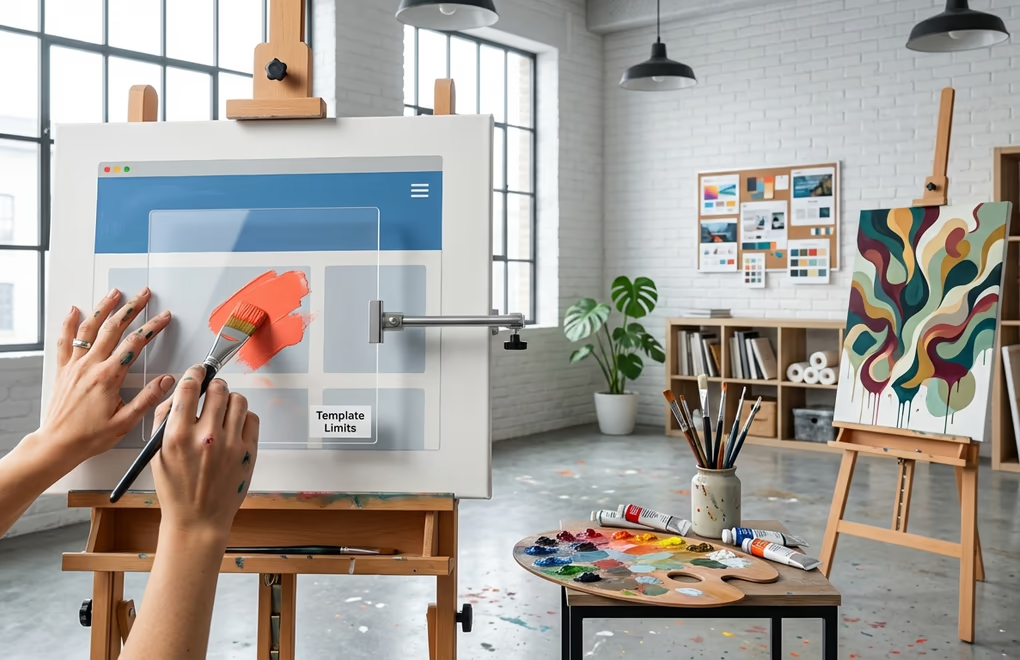
AI website builders promise unlimited design possibilities, but the reality tells a different story. These platforms rely on predetermined templates and algorithmic choices that create a distinctive sameness across websites. Visit enough Wix or Squarespace sites and you’ll notice the patterns, the same hero layouts, the same grid structures, the same subtle animations that telegraph which platform built the site.
Customization on AI platforms typically means choosing from preset options rather than creating truly unique designs. Want a specific checkout flow for your e-commerce store? You get whatever the platform provides. Need custom forms that integrate with your CRM in a particular way? Hope the platform supports that integration, because building your own isn’t an option.
WordPress offers over 60,000 plugins that extend functionality in virtually any direction imaginable. Want membership features? Choose from a dozen specialized plugins. Need advanced e-commerce capabilities? WooCommerce powers 28% of all online stores because it offers the flexibility other platforms can’t match. Looking for a solution to sell digital products? Multiple plugins compete for your business with different feature sets and pricing models.
The design flexibility gap has widened even further with WordPress Full Site Editing. Modern block themes like DigiFlash let you customize every element visually without touching code. Headers, footers, templates, and global styles all become editable through an intuitive interface that rivals AI builders for ease of use while maintaining the flexibility that proprietary platforms lack.
Business growth often requires capabilities that AI builders simply don’t support. Multilingual sites, complex membership tiers, custom booking systems, advanced analytics integrations, and industry-specific functionality all push against the walls of what proprietary platforms allow. When your business needs something the platform doesn’t offer, you either wait and hope they build it or accept that you’re stuck.
Security Vulnerabilities Hidden Behind Simplicity

The simplicity of AI website builders creates a false sense of security. Because users don’t see the underlying systems, they assume everything is handled correctly. The reality proves more concerning. Many AI-generated sites contain security issues that users never discover until something goes wrong. Exposed API keys, broken authentication flows, mishandled user data, and hidden vulnerabilities all lurk beneath polished interfaces.
Lightweight AI builders like Lovable and Framer have particular issues in this area. Their emphasis on speed and simplicity often comes at the cost of security fundamentals. You can’t see or control the underlying systems, integrations break without clear explanations, and troubleshooting becomes nearly impossible because the architecture remains hidden.
WordPress security receives constant scrutiny from a global developer community. Vulnerabilities get identified and patched rapidly. Security plugins like Wordfence and Sucuri provide additional protection layers, and you maintain visibility into your entire security posture. When you follow WordPress security best practices, you’re implementing protections that have been battle-tested across millions of sites.
The transparency difference matters significantly for businesses handling sensitive information. With WordPress, you can audit your security setup, hire specialists to test for vulnerabilities, and implement exactly the protections your situation requires. With AI builders, you trust that their hidden systems handle security correctly, a trust that occasionally proves misplaced.
Copyright ownership adds another wrinkle to the security conversation. AI-generated content may not qualify for copyright protection in many jurisdictions, potentially leaving your business vulnerable to competitors copying your site’s content without legal recourse. Human-created content on WordPress maintains clear copyright status.
SEO Limitations That Handicap Your Visibility

Search engine optimization often determines whether a business website succeeds or fades into obscurity. AI website builders market themselves as SEO-friendly, but their standardized approaches frequently conflict with effective optimization strategies. The platforms implement one-size-fits-all content structures that may not align with your specific keyword targets or local search requirements.
Content hierarchy controls prove particularly limiting. AI builders follow predetermined patterns for headings, meta descriptions, and content organization. When you need to optimize a page for specific keywords or implement schema markup for rich snippets, you often hit walls that the platform simply won’t let you climb over.
WordPress has decades of SEO optimization built into its foundation. Plugins like Rank Math and Yoast SEO provide granular control over every SEO element, from title tags to social media previews to XML sitemaps. The debate between Rank Math and Yoast continues because both offer capabilities that AI builders can’t match.
Technical SEO elements like page speed also favor WordPress when configured correctly. AI builders add platform overhead that you can’t optimize away. WordPress users control their hosting environment, caching strategies, and code efficiency. Tools like DigiBlocks only load CSS and JavaScript when blocks are actually used, ensuring minimal impact on page load times, a direct ranking factor in Google’s algorithm.
The black box nature of AI builders creates another SEO concern. These platforms may filter or rewrite content in ways that affect optimization without your knowledge. The lack of transparency into how recommendations are made leaves you guessing about why rankings move in particular directions. WordPress gives you complete visibility into every element affecting your search performance.
Image optimization represents another area where WordPress excels. You can choose exactly how images are compressed, which formats to use, and implement lazy loading strategies that match your specific needs. Our guide on WordPress image optimization with WebP and AVIF covers techniques that simply aren’t available on most AI platforms.
The Real Cost Comparison Nobody Shows You
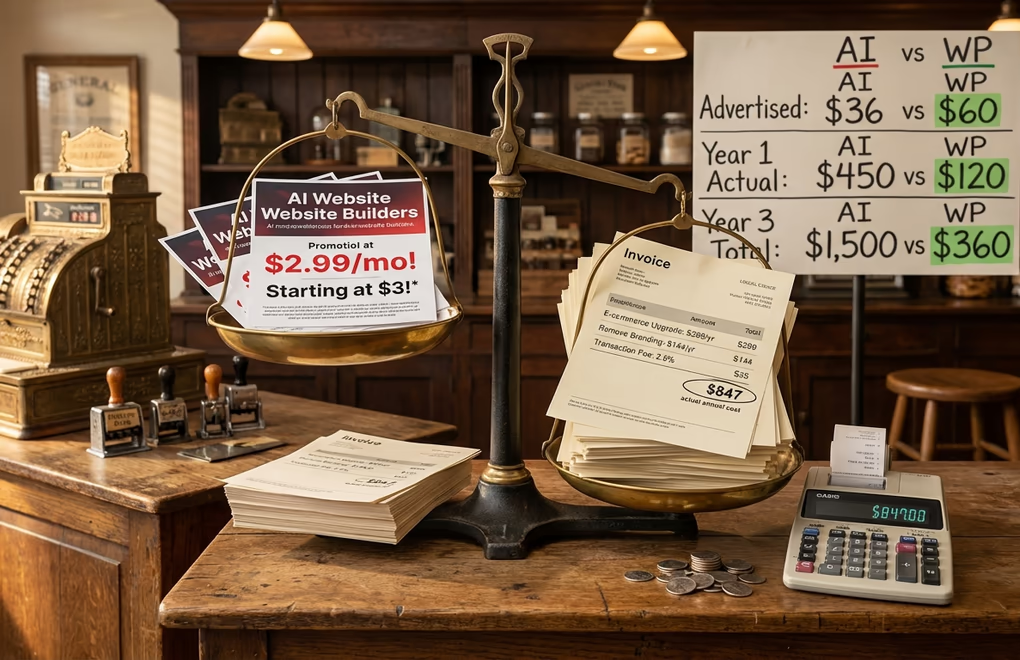
AI website builder pricing looks attractive at first glance. Hostinger advertises plans starting under $3 per month, Wix and Squarespace offer tiered plans that seem reasonable. But the advertised prices rarely reflect what you’ll actually pay, especially as your business grows and requires features beyond the basic tier.
The low introductory prices typically require annual commitments and increase substantially upon renewal. Features you’ll eventually need, like e-commerce capabilities, custom domains without platform branding, increased storage, or priority support, all push you toward higher-priced tiers. Transaction fees on sales add another cost layer that basic tier users discover too late.
WordPress hosting starts around $3-5 per month for quality shared hosting, with premium managed WordPress hosting available from $20-30 monthly for sites needing more resources. The platform itself costs nothing since it’s open source. Themes and plugins often have free versions that work perfectly well, with premium options available if you need advanced features.
The three-year cost comparison reveals the hidden reality. AI builder users often find themselves paying $300-500 annually for features that WordPress delivers for half that price or less. More importantly, WordPress costs scale with your actual needs rather than arbitrary tier boundaries. You add specific functionality when required instead of upgrading to an entire tier for one feature.
Time costs also deserve consideration. AI builders save hours during initial setup, but you may spend those hours multiple times over fighting against platform limitations later. WordPress has a steeper initial learning curve, but the investment pays dividends through flexibility that prevents the need for platform migrations and workarounds.
Hidden costs extend beyond monthly fees. Many AI builders charge transaction fees on every sale, typically ranging from 2% to 5% on top of payment processor fees. A business generating $50,000 in annual sales could pay an extra $1,000-2,500 yearly just in platform transaction fees. WordPress e-commerce solutions like WooCommerce charge zero transaction fees beyond what your payment gateway charges, and that difference compounds significantly as revenue grows.
When AI Builders Make Sense and When They Don’t

The AI versus WordPress decision shouldn’t be ideological. Both options serve specific needs well, and understanding those use cases helps you choose correctly. The mistake most people make is choosing based on immediate convenience rather than long-term requirements.
AI website builders work well for temporary projects, personal sites without business requirements, prototypes testing market interest, and sites that won’t need significant customization or scaling. If you’re building a wedding announcement site, a simple portfolio for a class project, or a landing page to validate an idea before investing in proper development, AI builders provide genuine value.
WordPress makes more sense for any business expecting growth, sites requiring custom functionality, projects where SEO matters significantly, and situations where you want ownership of your content and data. E-commerce sites, professional blogs, membership platforms, and businesses with specific industry requirements all benefit from WordPress’s flexibility.
A growing number of AI website builders now generate WordPress sites rather than proprietary alternatives. ZipWP, DreamHost Liftoff, and 10Web all use AI to accelerate WordPress site creation while maintaining the platform’s inherent flexibility. This hybrid approach offers the speed of AI generation with the long-term benefits of WordPress ownership. If speed is your primary concern, these tools let you have it without sacrificing future options.
Making the Right Choice for Your Future
The appeal of AI website builders is understandable. Who wouldn’t want a professional site in minutes instead of days? But the real question isn’t whether AI builders work today. It’s whether they’ll work for you a year from now, two years from now, when your business has evolved beyond what you could predict at launch.
AI can accelerate certain tasks, but it cannot replace the technical knowledge required to build and scale a production website. Database optimization, server configuration, security hardening, performance tuning, and SEO strategy all require human expertise that no AI builder has eliminated. The businesses that thrive online understand this reality: AI is a tool in the toolkit, not a replacement for understanding how websites actually work.
If you’re serious about building something that lasts, invest the extra time upfront to learn WordPress. The modern block editor has dramatically reduced the learning curve, and tools designed specifically for the Gutenberg editing experience make creating professional designs accessible to anyone willing to spend an afternoon learning the basics. That small investment in learning pays dividends that AI shortcuts never will.
What platform are you currently using for your website, and have you encountered any of the limitations discussed here? Share your experience in the comments.





0 Comments on "AI Website Builder vs WordPress: The Scalability Problems Nobody Warns You About"